
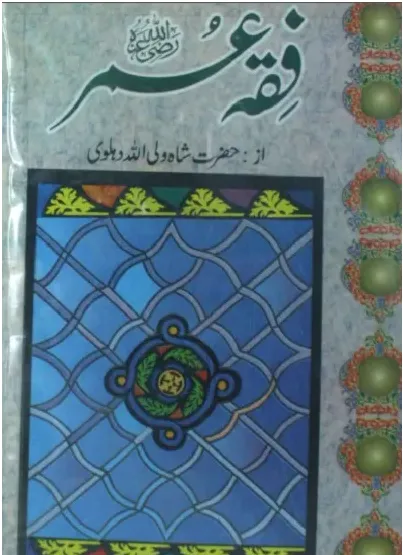
Fiqh e Umar by Shah Waliullah Dehlvi
Introduction
Fiqh-e-Umar by Hazrat Shah Waliullah Dehlvi is a remarkable and intellectually powerful Islamic work that explores the jurisprudential insights, legal reasoning, and administrative wisdom of Hazrat Umar ibn al-Khattab (RA), the second Rightly Guided Caliph of Islam. This book is not merely a historical narration; rather, it is a systematic study of Islamic law as practiced, interpreted, and implemented by Hazrat Umar (RA), analyzed through the scholarly lens of one of the greatest reformers of the subcontinent.
Shah Waliullah Dehlvi’s deep understanding of Qur’an, Hadith, Fiqh, and Islamic history makes Fiqh-e-Umar a unique contribution to classical Islamic jurisprudence. The book highlights how Islamic law remains dynamic, principled, and applicable across changing social realities—an idea that is especially relevant in the modern era.
About the Author: Hazrat Shah Waliullah Dehlvi
Hazrat Shah Waliullah Muhaddith Dehlvi (1703–1762) stands among the most influential Islamic scholars in South Asian history. His works span multiple disciplines, including:
- Hadith sciences
- Tafsir (Qur’anic interpretation)
- Islamic jurisprudence (Fiqh)
- Islamic philosophy
- Tasawwuf (Sufism)
- Social and political reform
Shah Waliullah’s intellectual mission focused on reviving the spirit of Islam, reconciling differences among fiqh schools, and restoring balance between Shari‘ah and spirituality. His books are still studied today across the Muslim world.
Fiqh-e-Umar reflects his mastery of legal theory and his belief that the practices of the Sahaba—especially Hazrat Umar (RA)—offer timeless guidance for Islamic governance and law.
What Is Fiqh-e-Umar?
Fiqh e Umar by Shah Waliullah Dehlvi is a scholarly examination of the legal decisions, judicial principles, and governance policies of Hazrat Umar Farooq (RA). Shah Waliullah compiles and analyzes rulings derived from:
- Qur’anic principles
- Prophetic Sunnah
- Consensus (Ijma‘)
- Public welfare (Maslahah)
- Contextual reasoning (Ijtihad)
The book demonstrates how Hazrat Umar (RA) applied Islamic law with wisdom, justice, flexibility, and foresight, without ever departing from divine principles.
Hazrat Umar (RA) as a Jurist and Statesman
Hazrat Umar ibn al-Khattab (RA) is universally recognized not only as a powerful ruler but also as a foundational jurist of Islam. His contributions to Islamic jurisprudence include:
- Establishing judicial systems
- Introducing administrative reforms
- Codifying legal precedents
- Applying law with social awareness
In Fiqh e Umar by Shah Waliullah Dehlvi presents Hazrat Umar (RA) as a model of applied fiqh, showing that Islamic law is not rigid but deeply rooted in justice, mercy, and public interest.
Core Themes of Fiqh-e-Umar
1. Dynamic Nature of Islamic Jurisprudence
One of the central lessons of Fiqh-e-Umar by Shah Waliullah Dehlvi is that Islamic jurisprudence is principle-based, not mechanical. Hazrat Umar (RA) often adapted rulings based on circumstances while remaining faithful to the Qur’an and Sunnah.
This approach counters the misconception that Islamic law cannot respond to changing realities.
2. Ijtihad and Legal Reasoning
The book highlights Hazrat Umar’s use of ijtihad—independent legal reasoning—especially in matters where explicit texts did not exist. Shah Waliullah explains that such reasoning is:
- Rooted in divine objectives (Maqasid al-Shari‘ah)
- Guided by justice and compassion
- Essential for societal balance
This makes Fiqh-e-Umar especially relevant for students of Islamic legal theory.
3. Public Welfare (Maslahah)
Hazrat Umar (RA) gave great importance to public welfare. Shah Waliullah shows how many of his decisions—such as administrative reforms and legal suspensions during hardship—were based on protecting society from harm.
This concept forms a cornerstone of classical Islamic fiqh and is carefully explained in the book.
4. Justice and Accountability
Justice is the backbone of Hazrat Umar’s legal philosophy. Fiqh-e-Umar documents examples where:
- Rulers were held accountable
- Law applied equally to all
- Personal authority never overrode justice
Shah Waliullah uses these examples to emphasize ethical leadership in Islam.
Importance of Fiqh-e-Umar in Islamic Legal Studies
Fiqh e Umar by Shah Waliullah Dehlvi editions have made this work accessible to scholars and students in South Asia, allowing a deeper understanding of:
- Fiqh of the Sahaba
- Foundations of Sunni jurisprudence
- Relationship between law and governance
- Practical implementation of Shari‘ah
Unlike purely theoretical fiqh manuals, this book presents living jurisprudence shaped by real societal challenges.
Language, Style, and Scholarly Approach
The style of Fiqh-e-Umar reflects Shah Waliullah’s balanced scholarship:
- Clear argumentation
- Strong reliance on Hadith
- Respect for juristic diversity
- Avoidance of sectarian bias
The Urdu translations of Fiqh e Umar by Shah Waliullah Dehlvi preserve this scholarly tone while making the book readable for non-Arabic and non-Persian readers.
Relevance of Fiqh-e-Umar in the Modern World
In today’s world, where Muslims struggle to understand how Islamic law applies to modern governance, economics, and society, Fiqh e Umar by Shah Waliullah Dehlvi offers essential guidance.
The book teaches that:
- Islamic law prioritizes justice over rigidity
- Leadership must serve people, not power
- Context matters in legal application
These principles make the book highly relevant even in the 21st century.
Who Should Read Fiqh-e-Umar?
This book is highly recommended for:
- Students of Islamic jurisprudence
- Researchers of Shah Waliullah Dehlvi books
- Readers interested in Hazrat Umar Farooq’s governance
- Scholars studying classical Islamic fiqh
- Urdu readers seeking authentic Islamic works
Availability and Formats
Today, Fiqh-e-Umar PDF Urdu and printed editions are widely available through Islamic publishers and digital libraries. This accessibility has helped revive interest in Shah Waliullah’s legal thought among modern readers.
Conclusion
Fiqh-e-Umar by Hazrat Shah Waliullah Dehlvi is a timeless masterpiece that presents Islamic jurisprudence as living, ethical, and deeply humane. By analyzing the legal wisdom of Hazrat Umar (RA), Shah Waliullah provides Muslims with a model of governance and law that is rooted in revelation yet responsive to reality.
For anyone serious about understanding Islamic law, the fiqh of the Sahaba, and the intellectual legacy of Shah Waliullah, this book remains an essential and enlightening read.
About Website
Islamic books PDF. This website is dedicated to Islamic books: the Qur’an Majeed, Tafseer, Hadith, Osool e Hadith, fiqh, Islamic history, and many other historical and general PDF books. They are available for online reading and can be easily downloaded. Fiqh e Umar by Shah Waliullah Dehlvi Free PDF
Our mission is to provide full access to all Muslims who want to read or download any Islamic or History book on any topic in PDF format. This website is also a good platform for researchers and scholars. They will easily find the book they need in the search tab.
Download Link:
Fiqh e Umar by Shah Waliullah Dehlvi Free PDF Download